
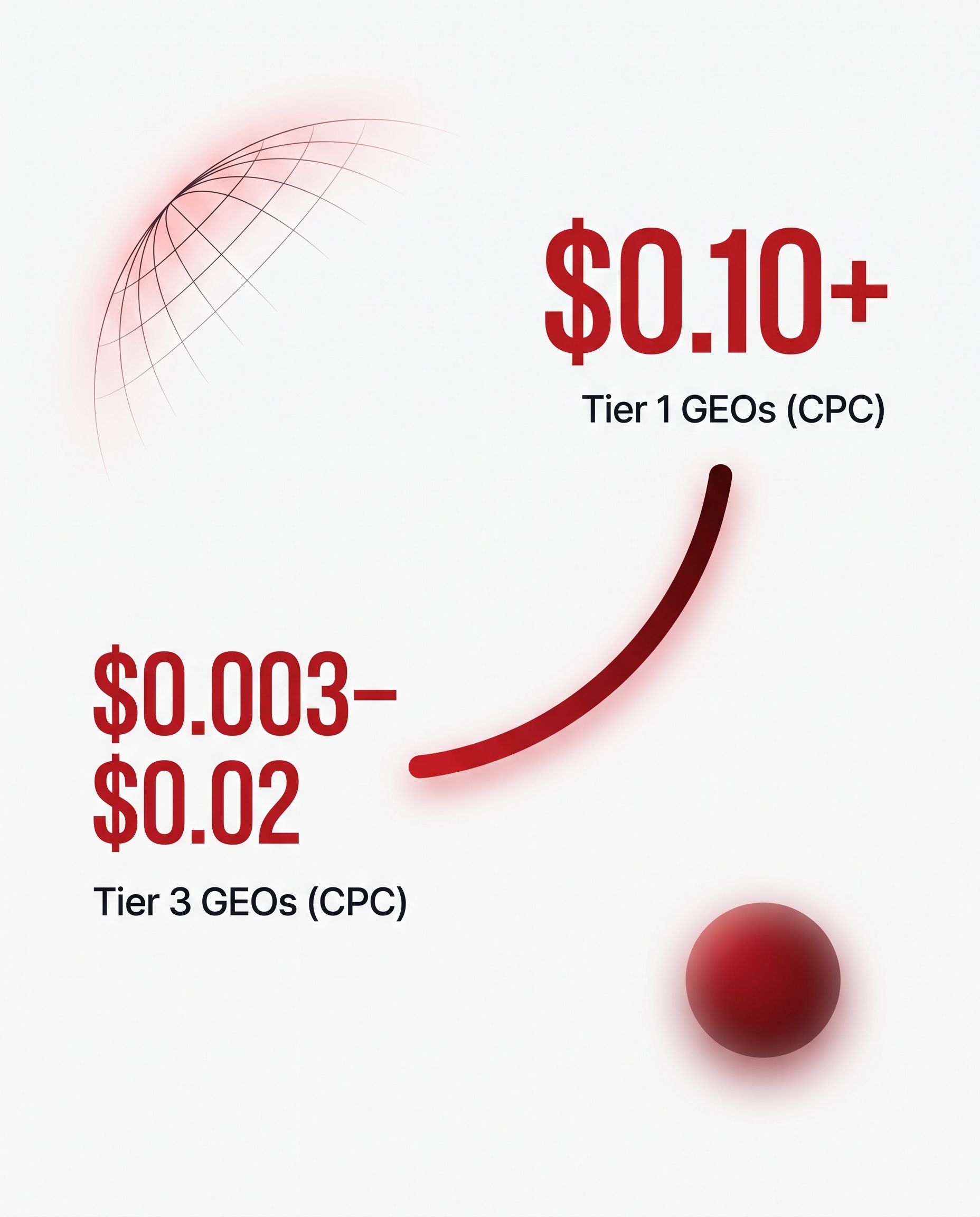
Push traffic is paid traffic delivered through browser- or OS-level push notifications to users who previously opted in to receive them. It's not a website visitor and not a display impression - it's a subscriber on a permission-based list, reached the same way a site would reach them with a "your order shipped" alert, except the message is an ad. This is also what most buyers mean when they say push notification traffic - the two phrases are interchangeable. Most networks price it by CPC, with real click costs ranging from roughly $0.003-$0.02 in Tier 3 GEOs up to $0.05-$0.10+ in Tier 1 markets, depending on device, OS, and targeting precision - these ranges are a TrafficSigma editorial estimate based on typical published network rates, not an audited industry figure.
The TrafficSigma team built this glossary entry because "push traffic" gets used loosely across the industry - sometimes to mean the ad format (what the notification looks like), sometimes the buying mechanics (where to source it), and sometimes, correctly, the underlying inventory type. This page covers only the third meaning: what push traffic is, structurally, before you go anywhere near buying it.
Push traffic meaning: the three parts of the definition
Break "push traffic" into its three load-bearing components and the term stops being vague:
- Subscriber-based: every user in a push traffic pool actively clicked "Allow" on a browser or app permission prompt at some point - usually on a publisher site unrelated to the eventual advertiser. That single opt-in event is what creates the addressable subscriber, and it's what separates push traffic from a cold display impression.
- Notification-delivered: the ad arrives as a native OS- or browser-level notification (an icon, a short headline, a body line) rather than as a banner or in-page unit. It shows up outside the browsing session entirely - on a lock screen, in a notification tray, or in-app - which is precisely why it converts on users who aren't currently on any website.
- CPC-priced, list-sourced inventory: advertisers buy access to these opted-in lists almost exclusively on a cost-per-click basis, and the supply itself is aggregated by ad networks from thousands of publisher sites running subscription prompts, then resold at volume. Pricing tracks GEO tier and list freshness far more than it tracks creative quality, which is part of why push traffic advertising stays cheap relative to search or social CPCs.
Put together: push traffic advertising is subscriber inventory, monetized through notification placements, transacted on a click-cost basis - not a specific ad unit design and not a specific buying platform, just the underlying traffic type those two things run on.
Launch push campaigns from $0.005 CPC with TrafficSigma!Push traffic vs. the format and the buying process
Two related questions get bundled into "what is push traffic" that deserve their own answer elsewhere. If you're asking what the actual notification unit looks like - icon size, title/body character limits, how it renders on Android vs. desktop Chrome - that's ad-unit anatomy, not traffic type, and TrafficSigma's 9 Best Push Notification Ad Networks for Affiliates in 2026 covers it in full. If you're asking where to actually buy push traffic, what GEO-level CPC benchmarks look like, and how to vet a subscriber list's quality before spending budget, that's the complete buying guide - the next step in this cluster.